For Australian Tradies & Local Service Businesses
Marketing for Plumbers — The System That Fills Your Calendar
Most plumbers don't have a marketing problem. They have a systems problem. We fix that.
Straight through to the person who'd actually do the work — no call centre.
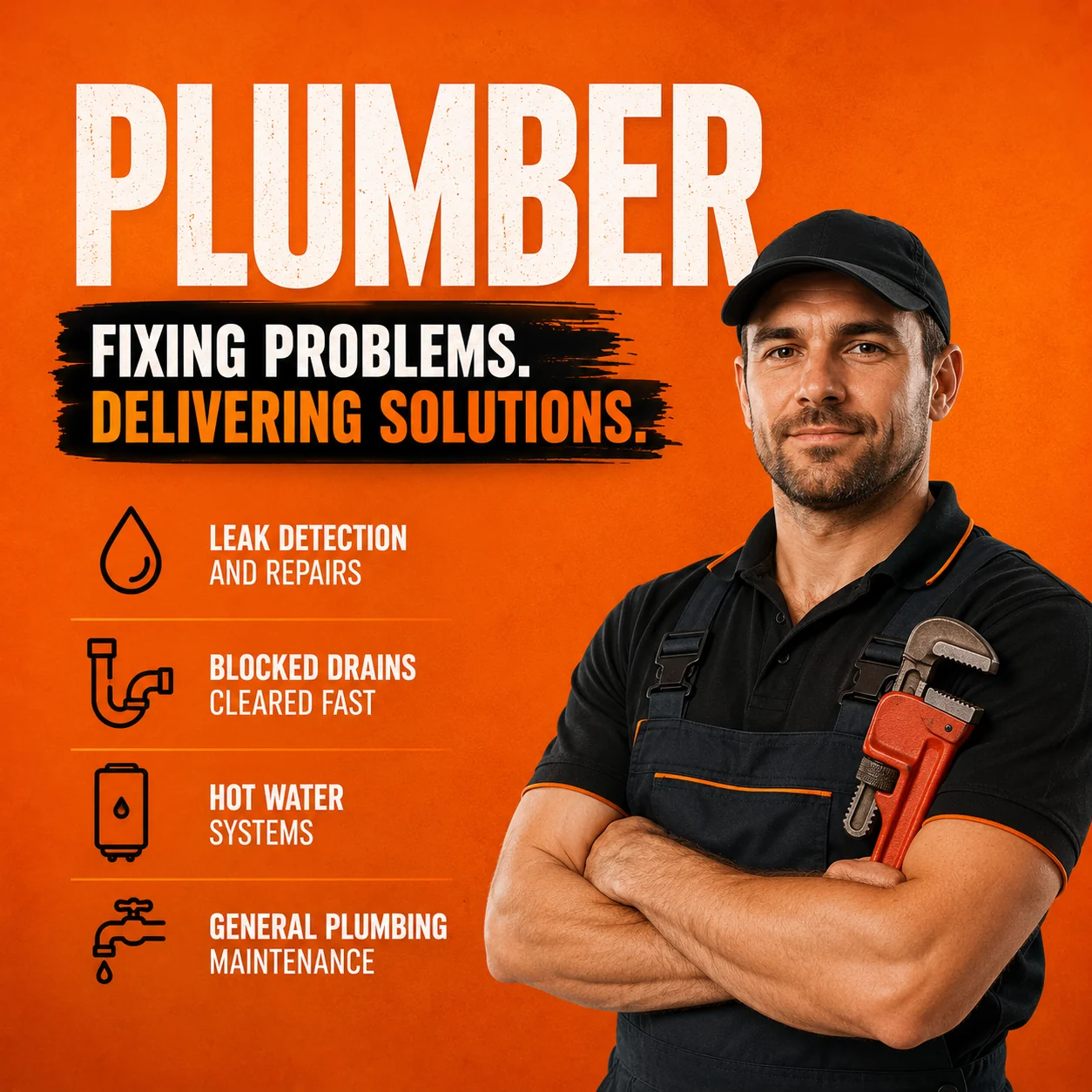
Plumbers don't have a marketing problem. They have a systems problem — and the jobs are going to whoever has the better machine.
The average plumber loses work every single day. Not because they lack skills. Not because the competition is cheaper. Because the phone went unanswered during a job, the website loaded slowly on a mobile, the follow-up never happened, or the quote sat in someone's inbox for three days. Every one of those gaps is a job that went to someone else.
What you actually need isn't more advertising. It's a system — one that captures attention, responds fast, converts visitors into enquiries, and follows up automatically so nothing falls through.
Here's what that system looks like for a plumbing business in Australia.
Your Website: The First Thing That Loses You Jobs
Most plumber websites are digital business cards. Name, number, a stock photo of pipes. That's not a website — it's a placeholder.
A conversion-focused website for a plumbing business does specific things:
- Click-to-call in the header, visible on mobile — if someone's panicking about a burst pipe at 11pm, they need to tap a button and call you, not read about your credentials
- Service area clarity — Google needs to know exactly which suburbs you cover, and so does the visitor
- Trust signals that matter — licence number, years in operation, real photos of your team and vans, not stock images
- A quote form that actually gets filled in — short, specific, with a clear expectation of when you'll follow up
Speed matters, too. A site that takes four seconds to load on a 4G connection will lose to one that loads in under two. On mobile, slow is invisible — the visitor bounces and calls the next result.
Local SEO: Owning the Map Pack in Your Suburbs
When someone searches "blocked drain Chatswood" or "emergency plumber Parramatta", three businesses show up before the organic results. That map pack is where plumbing jobs are won and lost.
Getting there requires consistent work across several areas:
- Google Business Profile optimisation — complete, accurate, updated regularly, with service area suburbs listed
- Reviews — quantity and recency matter. A business with 80 reviews averaging 4.8 stars outranks one with 12 reviews at 4.9
- On-site signals — service pages built around specific suburbs and services, with the kind of content Google's local algorithm rewards
- Citations and NAP consistency — your name, address, and phone number appearing identically across directories, association pages, and industry listings
A plumber we work with was nowhere in the map pack for their main service suburb when we started. Within four months, they were appearing for their primary keyword and several emergency search terms. No shortcuts — just systematic, sustained work.
Google Ads: The Volume Lever
SEO builds a foundation. Google Ads turns on a tap.
For plumbing businesses, Search Ads targeting high-intent terms — "plumber near me", "hot water system repair [suburb]", "24 hour plumber [city]" — puts you at the top of results immediately. You only pay when someone clicks.
The difference between Ads that waste money and Ads that generate jobs:
- Negative keywords — blocking irrelevant traffic (people searching for plumbing courses, DIY guides, product-only queries)
- Ad copy that matches the search — someone searching "emergency plumber" needs to see "emergency" in your headline
- Landing pages that convert — sending ad traffic to your homepage is money left on the table. A dedicated page for each campaign performs measurably better
- Call tracking — so you know which keywords are generating actual calls, not just clicks
Ads work best when they run alongside SEO, not instead of it. The combination means you're appearing in multiple positions on the results page.
Missed-Call Text-Back: The Highest-ROI System a Plumber Can Install
This is the one most plumbing businesses overlook, and it's where the most immediate revenue recovery happens.
The reality: you're on a job, your phone rings, you can't answer it. That caller hangs up and calls the next plumber on Google. By the time you finish the job and call back, they're already booked with someone else.
Missed-call text-back fires an automated SMS within seconds of a missed call:
"Hi, this is [Your Business] — sorry we missed your call! We're on a job right now. What do you need done and what suburb are you in? We'll get back to you shortly."
Three things happen immediately: the lead knows you exist and are responsive, the conversation moves to text so you can manage it between jobs, and the caller stops looking at competitors.
For emergency and after-hours plumbing calls — which go to whoever answers first — this system is the difference between winning and losing that job.
Lead Follow-Up: The Quotes That Don't Convert Themselves
Most plumbers quote jobs and then wait. The prospect goes quiet, the plumber moves on. Meanwhile, the prospect is still deciding.
Automated follow-up closes that gap. After a quote is sent, a sequence of SMS and email messages goes out automatically over the next few days:
- Day 1: Quote confirmation and a link to your Google reviews
- Day 3: A short check-in asking if they have any questions
- Day 5: A gentle nudge if no response
This doesn't replace a phone call — it supplements it, and it runs without you thinking about it. A plumber we work with converted two additional jobs per month just from follow-up on quotes they'd assumed were dead.
Google Reviews: The System That Makes Them Happen
Reviews don't happen by accident. Satisfied customers are unlikely to leave one unless they're asked at the right moment, in the right way.
A review funnel automates the ask. After a job is completed, an SMS goes out to the customer with a direct link to your Google Business Profile review page. No friction, no hunting around for where to leave a review.
The timing matters. Asking within an hour of job completion — when the relief of a fixed problem is fresh — converts far better than asking a week later.
Consistent reviews compound. They lift your map pack ranking, they increase click-through rates from Google, and they give new customers the confidence to call you over a competitor with fewer reviews.
Unified Inbox: One Place for Every Lead
When leads come from multiple channels — phone, website form, SMS, Facebook message — they scatter. Things get missed. Responses are slow.
A unified inbox brings every channel into one place, so whoever's managing enquiries isn't bouncing between apps. Leads don't fall through because they came from the "wrong" channel.
For plumbing businesses with admin support, or owner-operators managing their own pipeline, this is the difference between a chaotic afternoon of messages and a manageable system.
One Machine, Not Six Tactics
The businesses that grow consistently aren't running one-off campaigns or switching tactics every quarter. They've built a machine: visible on Google, fast to respond, systematic with follow-up, accumulating reviews, and converting visitors into enquiries.
Every part connects. SEO drives traffic to a website that converts. Missed-call text-back captures leads that would otherwise disappear. Follow-up closes quotes that went cold. Reviews strengthen the map pack ranking that drives more traffic.
That's what we build for plumbing businesses — not individual tactics, but a connected system that keeps working when you're on the tools.
If you want to talk through what that looks like for your business, book a call with us.
No lock-in contracts
We build what works, and you stay because it does. Leave whenever you like.
You talk to the operator
The person who builds your system is the person who answers the phone. No junior account manager.
Live in 2–3 weeks
From brief to launch, once your content's sorted. We handle the build — you review and approve.
Frequently asked questions
What kind of marketing works best for plumbers?+
Local SEO and Google Ads get you found when someone searches 'plumber near me' or 'emergency plumber [suburb]'. But getting found is only half the job — you also need a website that converts, a system that responds to missed calls instantly, and a process that collects reviews automatically. All of those working together is what fills a calendar consistently.
How long does it take to see results from plumber marketing?+
Google Ads can generate leads within days of launching. Local SEO typically takes two to four months to move meaningfully in the map pack, depending on how competitive your suburbs are. Review and follow-up systems show an effect quickly because they stop the leakage that's already happening — missed calls, unconverted website visitors, leads that fell through the cracks.
Do I need to be on social media as a plumber?+
Not necessarily. For most plumbing businesses, the highest ROI is in Google search and the map pack — that's where people are when they actually need a plumber. Social media can help with brand awareness and reviews, but we'd never recommend spending budget there before the fundamentals are locked in.
What is a missed-call text-back system?+
It's an automated SMS that fires the moment you miss a call — within seconds. The message goes back to the caller, keeps the conversation going, and buys time until you can respond properly. Most plumbers miss calls daily because they're on jobs. This system means those leads don't go straight to the next plumber on Google.
Can you help with Google Business Profile for my plumbing business?+
Yes. Google Business Profile management is part of what we do — optimising the profile, keeping information current, managing Q&A, and running a review funnel that generates a steady stream of Google reviews. All of this helps you rank in the map pack for searches like 'plumber [suburb]'.
Do your marketing services lock me into a contract?+
No lock-in contracts. We work on a rolling monthly basis. Our aim is to build systems that perform well enough that you want to stay — not to trap you.
Ready to get more jobs?
See everything we do to help local businesses get more calls, more reviews, and more booked work. Give us a ring — no pressure, no BS.